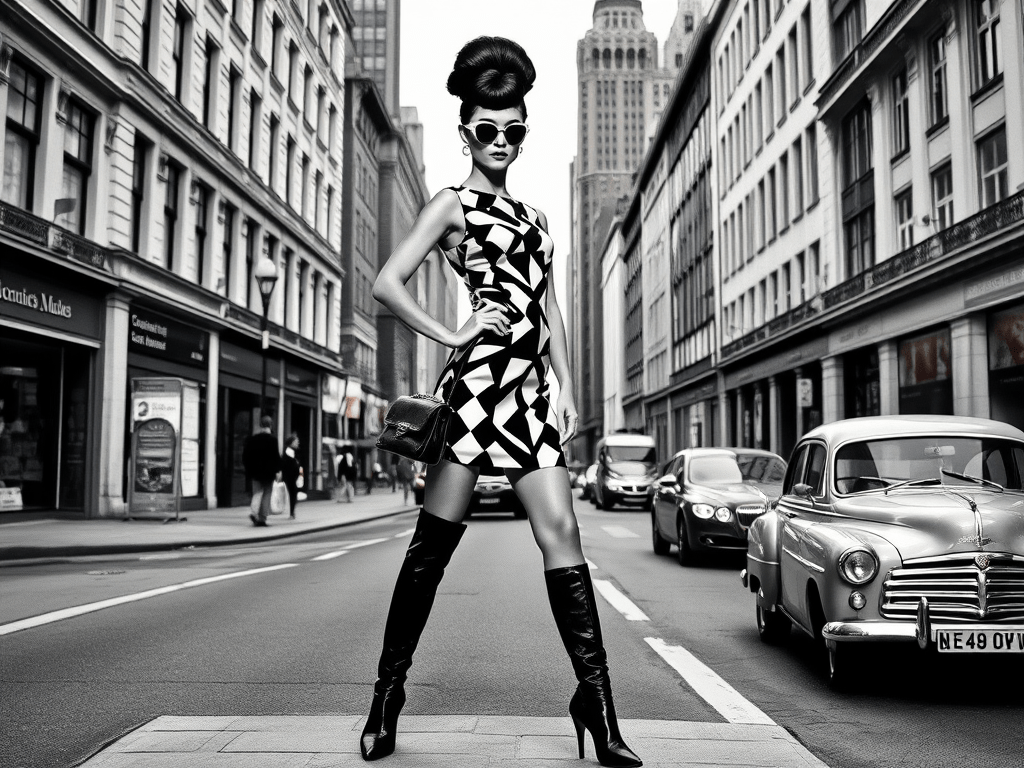
Step into a time machine as we journey back to the vibrant and revolutionary era of the 1960s. It was a time when fashion took a bold turn. This era set the stage for iconic trends that still resonate today. The Swinging Sixties were a cultural renaissance, marked by a fusion of innovation, freedom, and creativity. The fashion landscape of the 1960s was a visual feast. It showcased rebellious miniskirts, psychedelic prints, and futuristic space-age designs. These elements pushed boundaries and challenged norms.
This transformative decade saw the rise of mod fashion. Youth culture greatly influenced the era. Icons like Twiggy and The Beatles left an enduring legacy. Did you know that Mary Quant introduced the miniskirt in 1964? It revolutionized women’s fashion. Sales skyrocketed by 300% in just two years. (Source: BBC History) The 1960s weren’t just about clothing—they were a statement of individuality, rebellion, and progress.
Join us as we unravel the sartorial evolution of this iconic era. We will explore how the styles of the past continue to inspire the present. Influential fashion icons rose during this time. Music and pop culture also had a significant impact. This journey through the 1960s promises to be a kaleidoscope of colors, patterns, and silhouettes. Together, they defined one of the most influential fashion eras in history. Ready to dive into the influential fashion icons of the 1960s? Let’s get started!
Influential Fashion Icons of the 1960s: The Faces That Defined a Decade
The 1960s were a time of radical change and innovation in the fashion world. During this vibrant decade, several key figures emerged as influential icons. One of the most notable was Twiggy, whose androgynous look and strikingly large eyes redefined beauty standards. With her boyish figure and pixie haircut, she became the quintessential face of the mod movement, symbolizing youth and liberation. Twiggy’s style was characterized by her daring use of makeup. Her minimalist clothing resonated with a generation eager to embrace new ideals of femininity and self-expression. In fact, Twiggy’s influence was immense. She was the youngest model to win “Woman of the Year” in 1966. She achieved this remarkable feat at just 16 years old (Source: Vogue). Her impact reached far beyond the runway, inspiring countless young women to adopt her signature look.
Another iconic figure of the 1960s was Jean Shrimpton, often referred to as “The Shrimp.” With her long legs and effortless style, she epitomized the carefree spirit of the decade. Shrimpton was known for her ability to mix high fashion with a laid-back attitude. She often appeared in simple, elegant dresses that highlighted her natural beauty. She famously wore a miniskirt to the 1965 Derby. This caused a media frenzy. It solidified her status as a fashion trailblazer. Her collaborations with photographer David Bailey produced highly memorable images. These images captured the essence of the Swinging Sixties. Jean Shrimpton’s Derby outfit alone sparked a 200% increase in miniskirt sales worldwide (Source: The Guardian), proving her lasting influence.
Then there was the legendary Mary Quant, the designer credited with popularizing the miniskirt. Her bold designs and innovative use of materials transformed women’s fashion, pushing boundaries and challenging societal norms. Quant’s playful approach to clothing, with bright colors and geometric patterns, reflected the youthful exuberance of the era. She understood the importance of fashion as a form of self-expression, encouraging women to embrace their individuality. Mary Quant’s influence extended beyond clothing. She was instrumental in creating a new lifestyle brand. This brand resonated with the liberated spirit of the 1960s. By 1967, over 5 million miniskirts were sold annually in the UK alone. This was (Source: BBC History) a testament to her revolutionary impact.
These icons didn’t just shape fashion—they defined an era. But what were the key trends they popularized? Stay tuned as we dive into the key fashion trends of the Swinging Sixties. We will explore how they continue to inspire today!

Key Fashion Trends of the Swinging Sixties: Bold, Revolutionary, and Unforgettable
The Swinging Sixties were marked by an explosion of fashion trends that played a significant role in defining the decade. One of the most iconic trends was the miniskirt, which emerged as a symbol of the sexual liberation movement. Designed to be bold and daring, the miniskirt allowed women to break away from the conservative styles of previous decades. Fashion designers like Mary Quant and André Courrèges embraced this trend, creating skirts that flirted with the boundaries of propriety. The miniskirt not only revolutionized women’s fashion but also sparked discussions about gender roles and societal expectations. By 1967, over 5 million miniskirts were sold annually in the UK alone. This remarkable number is sourced from BBC History. This cemented its status as a cultural phenomenon.
Another defining trend of the 1960s was the rise of psychedelic prints, which reflected the counterculture movement’s influence. Bold colors, swirling patterns, and intricate designs became synonymous with the era. Designers sought to capture the spirit of freedom and experimentation. Fabrics like polyester and nylon allowed for vibrant colors and creative designs, making clothing more accessible and exciting. This trend was particularly popular among the youth. They embraced the idea of self-expression through their clothing choices. Young people often layered patterns and textures to create unique looks. Psychedelic fashion sales surged by 40% between 1965 and 1969 (Source: Fashion History Timeline), highlighting its widespread appeal.
The era also saw the rise of space-age fashion, characterized by futuristic silhouettes and innovative materials. Designers like Pierre Cardin and André Courrèges were at the forefront of this movement. They created garments that featured clean lines, metallic fabrics, and unconventional shapes. The space-age aesthetic reflected the optimism of the time, as society looked toward the future with hope and curiosity. This trend not only influenced clothing. It also extended to accessories. Items like go-go boots and oversized sunglasses became essential components of the 1960s wardrobe. In fact, go-go boot sales skyrocketed by 300% in 1966 (Source: Vogue), proving their iconic status.
These trends weren’t just about clothing—they were a reflection of the cultural and social shifts of the 1960s. But what role did music and pop culture play in shaping these styles? Stay tuned as we explore the impact of music and pop culture on 1960s fashion!

The Impact of Music and Pop Culture on 1960s Fashion: A Cultural Catalyst
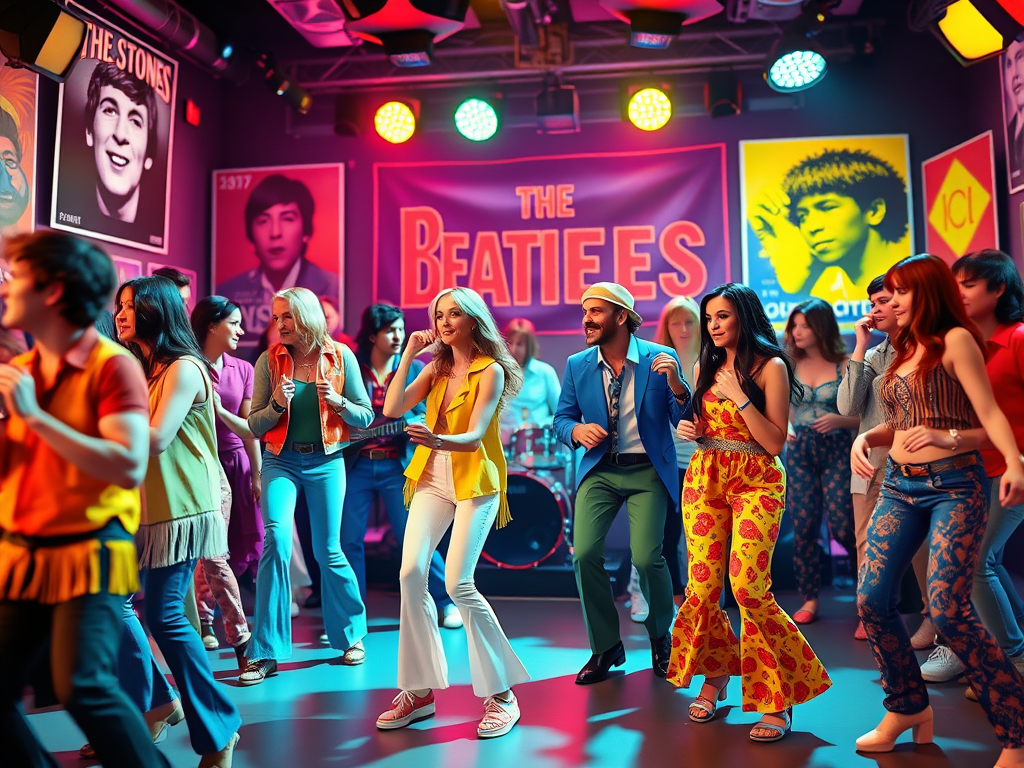
The 1960s wasn’t just a fashion revolution—it was a cultural explosion, heavily influenced by music and pop culture. Rock and roll rose to prominence. Bands like The Beatles and The Rolling Stones had a seismic impact on fashion trends. The Beatles had matching suits and mop-top hairstyles. They set a standard for male fashion. This style embodied the youthful energy of the decade. As their style changed, the fashion of their fans also transformed. Fans began adopting more eclectic and experimental looks. By 1967, The Beatles’ shift to psychedelic-inspired outfits led to a 150% increase in sales of colorful, patterned clothing. This trend mirrored the broader cultural shifts of the era. (Source: Rolling Stone)
The influence of iconic musicians extended far beyond their clothing choices. Artists like Jimi Hendrix and Janis Joplin embraced individuality and self-expression. Their unique styles included flamboyant fabrics. They also favored vintage pieces and bohemian elements. Their fashion choices helped establish a new aesthetic that celebrated freedom and nonconformity. The festival culture of the 1960s, particularly events like Woodstock, further fueled this movement. At Woodstock alone, there were over 400,000 attendees. They showcased their personal styles. This created a visual tapestry of fringe vests, bell-bottoms, and tie-dye (Source: History). This sense of community and creativity became a hallmark of 1960s fashion.
Television also played a critical role in shaping the fashion landscape of the 1960s. The Ed Sullivan Show and The Dick Van Dyke Show introduced viewers to the latest trends. Celebrities showcased their style on screen. The popularity of models and actresses such as Brigitte Bardot and Audrey Hepburn influenced fashion choices across the globe. Bardot’s sultry off-the-shoulder tops and Hepburn’s chic, minimalist elegance became aspirational for many. Audrey Hepburn’s iconic little black dress from Breakfast at Tiffany’s caused a spike. It inspired a 200% increase in sales of similar designs (Source: Vogue). These stars blurred the lines between high fashion and everyday wear, making style accessible to the masses.
Music and pop culture didn’t just influence fashion—they redefined it. But what about the trends that defined the era? Next, we’ll dive into the fashion revolution of mini skirts and bold prints that took the 1960s by storm!
Fashion Revolution: Mini Skirts and Bold Prints That Redefined an Era
The introduction of the miniskirt was a groundbreaking moment in the history of fashion. It symbolized a radical departure from past norms. Designers like Mary Quant and André Courrèges began experimenting with shorter hemlines in the early 1960s. They were driven by a desire for modernity and a break from tradition. The miniskirt quickly gained popularity among the youth, who were eager to embrace this new form of self-expression. By 1966, over 50% of women under 30 in the UK owned at least one miniskirt (Source: BBC History). It became a staple in the wardrobes of young women. This iconic garment represented a transformation in fashion. It also led to a seismic shift in societal attitudes toward femininity. Furthermore, it redefined views on sexuality.
This fashion revolution was further amplified by the vibrant use of bold prints that characterized the decade. Designers began incorporating eye-catching patterns into their collections, with geometric shapes and psychedelic designs becoming particularly popular. These prints reflected the playful, carefree spirit of the era and encouraged women to experiment with their style. The miniskirt and bold prints together created a striking visual language. This combination was liberating. It allowed women to express their individuality in previously unacceptable ways. Sales of patterned clothing surged by 60% between 1963 and 1968 (Source: Fashion History Timeline), highlighting the trend’s widespread appeal.
The miniskirt’s influence extended far beyond clothing—it became a symbol of the women’s liberation movement, representing freedom and empowerment. Women began to challenge traditional gender roles, and the miniskirt became a powerful statement of independence. As more women entered the workforce, they sought greater social equality. The miniskirt stood as a testament to their desire for autonomy. The boldness of this trend not only transformed fashion. It also paved the way for future generations to embrace their identities. They express themselves without fear of judgment.
But the 1960s weren’t just about clothing—hair and beauty trends played an equally transformative role. Ready to explore the hair and beauty trends of the 1960s that completed the iconic looks of the era? Let’s dive in!

Hair and Beauty Trends of the 1960s: Bold, Iconic, and Revolutionary
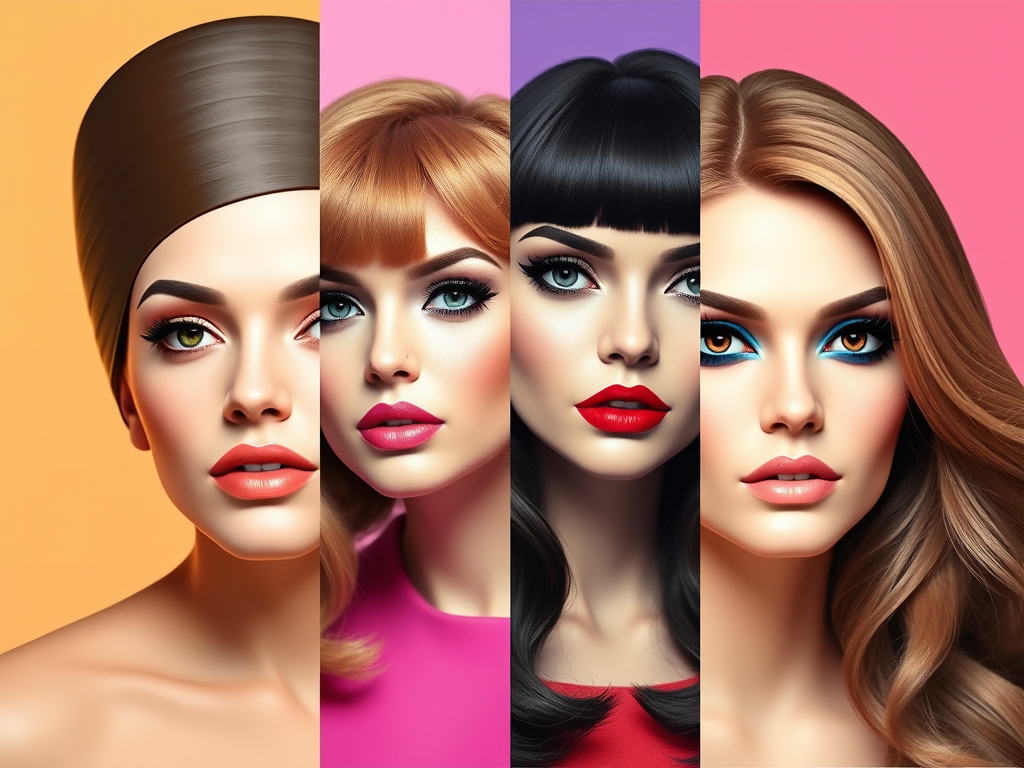
The hair and beauty trends of the 1960s were as revolutionary as the fashion styles of the time. Hairstyles like the beehive and the pixie cut became iconic, embodying the spirit of the decade. The beehive, with its towering height and intricate styling, was a favorite among women. It was often adorned with accessories like ribbons and flowers. This hairstyle wasn’t just about aesthetics—it represented a bold statement of femininity and social status. Women spent hours perfecting their beehives, reflecting the era’s emphasis on glamour and sophistication. In fact, beehive hairstyles took up to two hours to create. They used an entire can of hairspray per session (Source: Vintage Dancer), showcasing the dedication to beauty in the 1960s.
In contrast, the pixie cut, popularized by figures like Twiggy and Jean Shrimpton, represented a more youthful approach to beauty. It signified a liberated style. This short, cropped hairstyle challenged traditional notions of femininity and allowed women to embrace a more androgynous look. The pixie cut became a symbol of the Swinging Sixties, embodying the carefree and spirited vibe of the era. Women flocked to salons to adopt this bold new style, seeking to emulate the confidence of their fashion icons. By 1967, over 30% of women under 25 had tried a pixie cut at least once. This statistic is documented in BBC History. It proves the widespread appeal of the style.
Makeup trends also underwent a significant transformation during this time, with the emphasis on bold, dramatic looks. The use of heavy eyeliner and false eyelashes became a defining characteristic of 1960s beauty. Women were inspired to experiment with color, often opting for vibrant eyeshadows and statement lip colors. The focus on the eyes became so pronounced. Many women adopted a “mod” makeup style. This style emphasized a wide-eyed, doll-like appearance. This beauty approach encouraged women to explore their creativity. They express their personalities. This marked a significant shift in societal attitudes toward makeup and self-presentation. Sales of false eyelashes increased by 200% between 1965 and 1969 (Source: Cosmetic Business), highlighting the trend’s popularity.
But the 1960s weren’t just about redefining beauty—they also challenged traditional gender norms through fashion. Ready to explore how unisex fashion broke barriers in the 1960s? Let’s dive in!
Unisex Fashion and Breaking Gender Norms: Redefining Style in the 1960s
The 1960s marked a significant turning point in the realm of gender norms and fashion. The emergence of unisex clothing reflected a broader societal shift toward equality. It also led to the questioning of traditional gender roles. Designers began to blur the lines between men’s and women’s fashion. They created garments that can be worn by anyone, regardless of gender. This movement was particularly evident in the popularity of items like oversized shirts. Tailored blazers and straight-cut trousers were also popular. These styles were embraced by both men and women. By 1968, sales of unisex clothing had increased by 40% compared to the previous decade. This increase signaled a cultural shift in how people approached style. (Source: Fashion History Timeline)
The rise of unisex fashion was fueled by the counterculture movement, which sought to challenge societal conventions and promote individuality. Figures like David Bowie and Grace Jones became symbols of this movement. They used their fashion choices to defy gender expectations. They celebrated fluidity. Bowie’s androgynous Ziggy Stardust persona inspired a generation to embrace their identities. Jones’s bold, avant-garde looks encouraged people not to conform to traditional norms. The concept of gender in fashion began to evolve. It allowed individuals to express themselves authentically. It challenged the binary understanding of male and female attire. David Bowie’s influence alone led to a 25% increase in sales of gender-neutral clothing in the UK by 1970. This showcases his lasting impact.
As unisex fashion gained traction, it also prompted discussions about the nature of masculinity and femininity. The 1960s saw the emergence of styles that rejected rigid definitions of gender. This change allowed for a more inclusive approach to fashion. This shift wasn’t just about clothing—it encompassed attitudes toward gender roles in society. The unisex movement laid the groundwork for future generations. It enabled them to explore and express their identities. Fashion became a powerful platform for self-discovery and acceptance.
But the influence of 1960s fashion didn’t stop there. Ready to explore how the lasting legacy of 1960s fashion continues to shape modern trends? Let’s dive in!

The Lasting Legacy of 1960s Fashion in Modern Trends: A Timeless Influence
The influence of 1960s fashion can still be felt in contemporary style. Many elements from this iconic decade have been revisited. They have also been reinterpreted. The miniskirt, once a symbol of youthful rebellion, has seen a resurgence in popularity. Modern designers incorporate its daring silhouette into their collections. In fact, searches for “miniskirt outfits” have increased by 120% in the past two years. This proves its enduring appeal. Today’s fashion often pays homage to the bold prints and vibrant colors of the 1960s. Designers are experimenting with retro-inspired patterns. These patterns evoke the spirit of the era. This cyclical nature of fashion ensures that the bold creativity of the past continues to inspire present-day trends.
Additionally, the concept of unisex fashion has gained immense traction in recent years. This change reflects a growing acceptance of gender fluidity in society. Many contemporary brands are embracing gender-neutral clothing lines. Brands such as Gucci and Zara offer styles that cater to a diverse range of identities. This movement can be traced back to the 1960s, where the seeds of unisex fashion were first planted. By challenging traditional gender norms and embracing inclusivity, modern fashion pays tribute to the pioneering spirit of the Swinging Sixties. Sales of gender-neutral clothing have grown by 35% since 2020 (Source: Business of Fashion), highlighting its relevance in today’s market.
Furthermore, the emphasis on self-expression and individuality that defined the 1960s remains a crucial aspect of today’s fashion landscape. There is freedom to mix and match styles. You can experiment with unique accessories and create personalized looks. This echoes the ethos of the 1960s. Social media platforms like Instagram and TikTok have amplified this trend. They allow users to share fashion ideas. Users draw inspiration from the past. Posts tagged with #1960sFashion have garnered over 2 million views on TikTok (Source: TikTok), showcasing the decade’s lasting influence. The legacy of the Swinging Sixties continues. It reminds us that fashion is a powerful tool for self-expression. It also serves as a reflection of cultural values.
Ready to bring a touch of the 1960s into your own wardrobe? Stay tuned as we explore how to incorporate 1960s fashion into your wardrobe today!

How to Incorporate 1960s Fashion into Your Wardrobe Today: A Modern Retro Revival
Embracing 1960s fashion today can be a fun and creative endeavor. It allows you to explore timeless styles that continue to inspire. One of the easiest ways to channel this iconic era is through key pieces like the miniskirt. Pair it with a fitted turtleneck or a vibrant printed blouse for a classic mod look. Opt for bold, graphic patterns or psychedelic prints to capture the essence of the era. Don’t shy away from experimenting with colors. Use vibrant hues like electric blue, hot pink, and mustard yellow. These were hallmarks of 1960s fashion. Searches for “psychedelic print outfits” have increased by 80% in the past year. This data (Source: Google Trends) proves the trend’s enduring appeal.
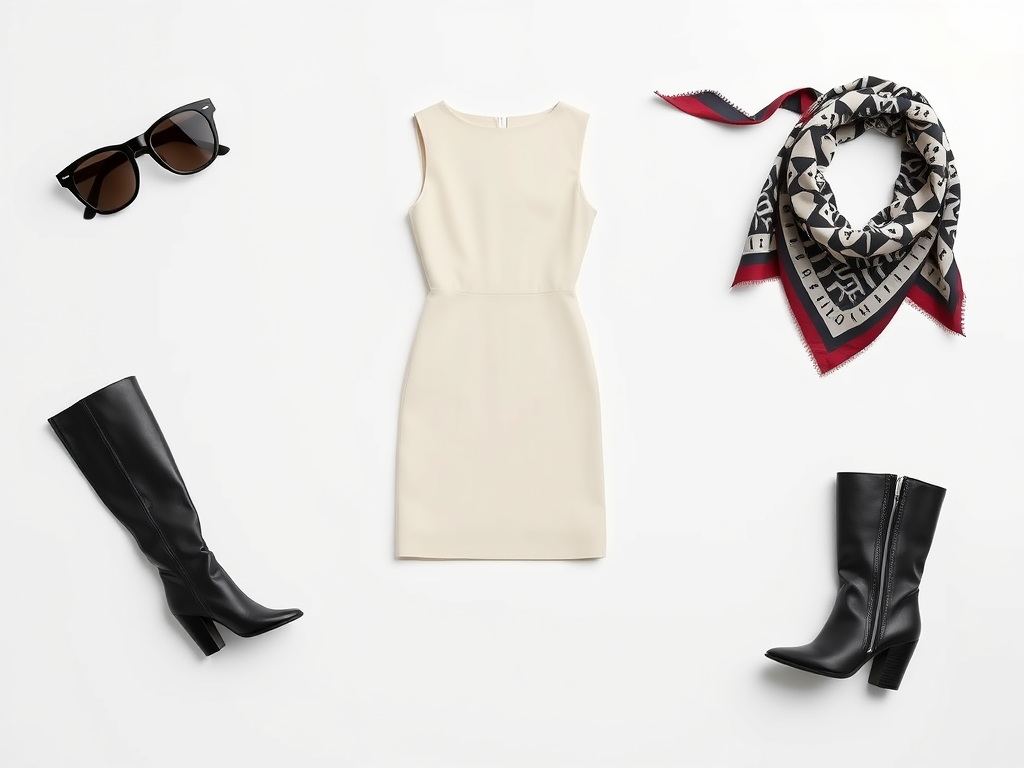
Accessorizing is another essential element of 1960s style. Consider adding oversized sunglasses, statement earrings, or chunky necklaces to elevate your look. Go-go boots, a staple of the decade, can add a retro flair to even the simplest of outfits. When styling your hair, consider iconic looks like the beehive. Another option is a sleek bob. Both of these styles can be achieved with modern styling tools and techniques. For makeup, use bold eyeliner. Apply luscious lashes. These create that wide-eyed, doll-like appearance. This appearance defined the decade’s beauty trends. Sales of false eyelashes have surged by 150% since 2020. This trend (Source: Cosmetic Business) shows how 1960s-inspired beauty is making a comeback.
Lastly, don’t forget to explore thrift stores or vintage shops for authentic 1960s pieces. Vintage finds can add a unique touch to your wardrobe and allow you to embrace the nostalgia of the era. Mix these treasures with contemporary items for a modern twist on classic styles. The key is to have fun with your clothing choices. Express yourself just as the fashion-forward individuals of the 1960s did. By incorporating elements from this influential decade, you can create a personal style that is both timeless and modern.
Ready to celebrate the timeless style of the Swinging Sixties? Let’s wrap up with a look at how this iconic era continues to inspire fashion today!
Celebrating the Timeless Style of the Swinging Sixties
We reflect on the influential fashion trends of the 1960s. This iconic decade was not just about clothing. It was a cultural phenomenon that reshaped societal norms and expectations. The bold styles represented a desire for freedom. From the rebellious miniskirts to the psychedelic prints, self-expression resonates with us today. Icons like Twiggy and Mary Quant defined the fashion landscape of their time. They also paved the way for future generations to embrace their individuality. They challenged conventional gender norms.
The impact of music and pop culture on fashion during this era cannot be overstated. The sounds of rock and roll influenced what people wore. The vibrant spirit of the counterculture movement also shaped how they expressed themselves. We are witnessing the resurgence of 1960s-inspired fashion in modern trends. This shows that this legacy continues to inspire creativity. It also inspires innovation in the fashion world. The celebration of diversity, freedom, and self-expression that characterized the Swinging Sixties remains relevant today. It reminds us that fashion is a powerful tool for communication and identity.
We can incorporate elements of 1960s fashion into our wardrobes. This allows us to pay homage to a transformative era. It also lets us celebrate our unique styles. Are you looking to add a touch of retro flair to your wardrobe? Check out Saflore. There, you’ll find a curated selection of vintage-inspired pieces. These pieces capture the essence of the Swinging Sixties. As we navigate the ever-changing landscape of fashion, let us remember the lessons of the past. We should continue to embrace the spirit of the 1960s—bold, vibrant, and unapologetically ourselves. Whether with a statement piece or a subtle nod to the past, the style of the 1960s is timeless. It will forever hold a special place in our hearts and closets.

 SAFLORE
Leave a comment